
- 29 Oct, 2026
- Cards & Banking
- by Admin
How to spend stablecoins with your PassCash card
You hold stablecoins because they keep a steady value. The hard part has always been using them at the checkout. A PassCash debit card closes that gap: your supported stablecoin balance pays for groceries, fuel, subscriptions and flights, the same way any other card does.
This guide walks through how it works, which card to use where, and a few habits that keep your spending smooth and safe.
What it means to spend stablecoins with a card
Stablecoins are digital assets designed to hold a steady value, usually tied to the US dollar. USDT is the best-known example. They are useful for storing and sending value, but most shops, websites and apps don't accept them directly.
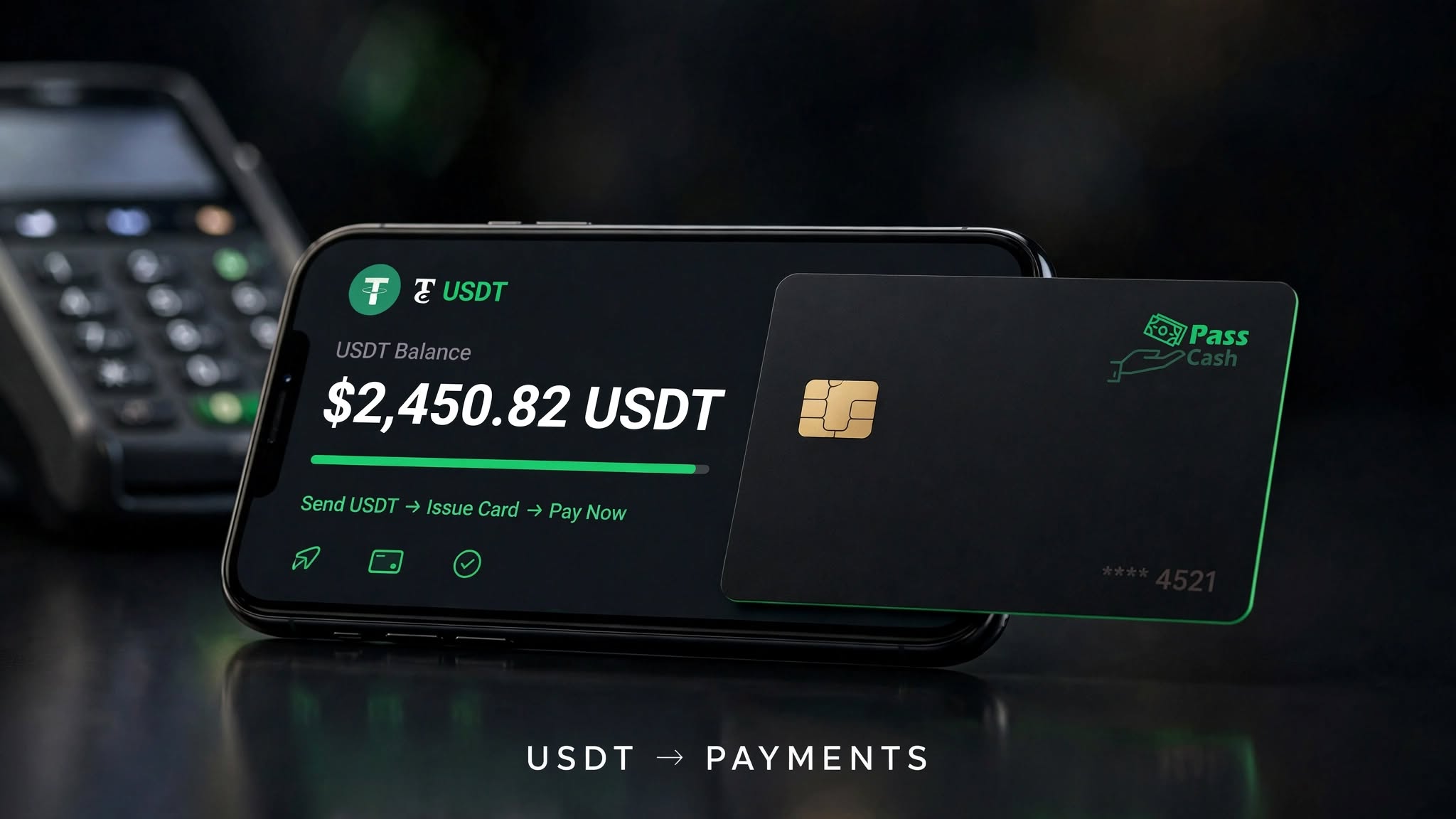
Your PassCash card is the bridge. You keep supported stablecoins in your PassCash account, and when you pay with your card, the purchase is covered from that balance. The merchant is paid the normal way. They don't need to know anything about crypto, and you don't need to cash out to a bank first.
For the bigger picture on why this shift is happening, read USDT Is Becoming a Payment Tool, Not Just a Crypto Asset.
How it works, step by step
Step 1: Create your PassCash account. Sign up and complete identity verification. Verification is required before a card can be issued, and it helps keep the network safe for everyone.
Step 2: Add funds. Deposit a supported stablecoin, or use another funding method available where you live. The current list of supported assets is shown in your account.
Step 3: Get your card. Request a virtual card from your dashboard, order a physical card, or both. The card types you can get depend on eligibility in your country. Physical cards are released in batches of 100 orders, so allow time for yours to arrive (more on that below).
Step 4: Pay. Online, enter your card details at checkout. In store, use your physical card like any other debit card.
Step 5: Check your activity. Every purchase appears in your PassCash account, so you always know what you spent and what is left.
Virtual card or physical card: which to use where
Most cardholders use both. The two cards draw on the same PassCash balance, so you can pick whichever suits the moment.
Online shopping: use your virtual card. It's ready in your account, with no wait for delivery.
Subscriptions and apps: use your virtual card. It keeps recurring payments on a card you manage from your dashboard.
Supermarkets, restaurants and fuel: use your physical card. It's made for paying in person.
Travel: use both. Book flights and hotels with your virtual card, then pay with your physical card when you arrive.
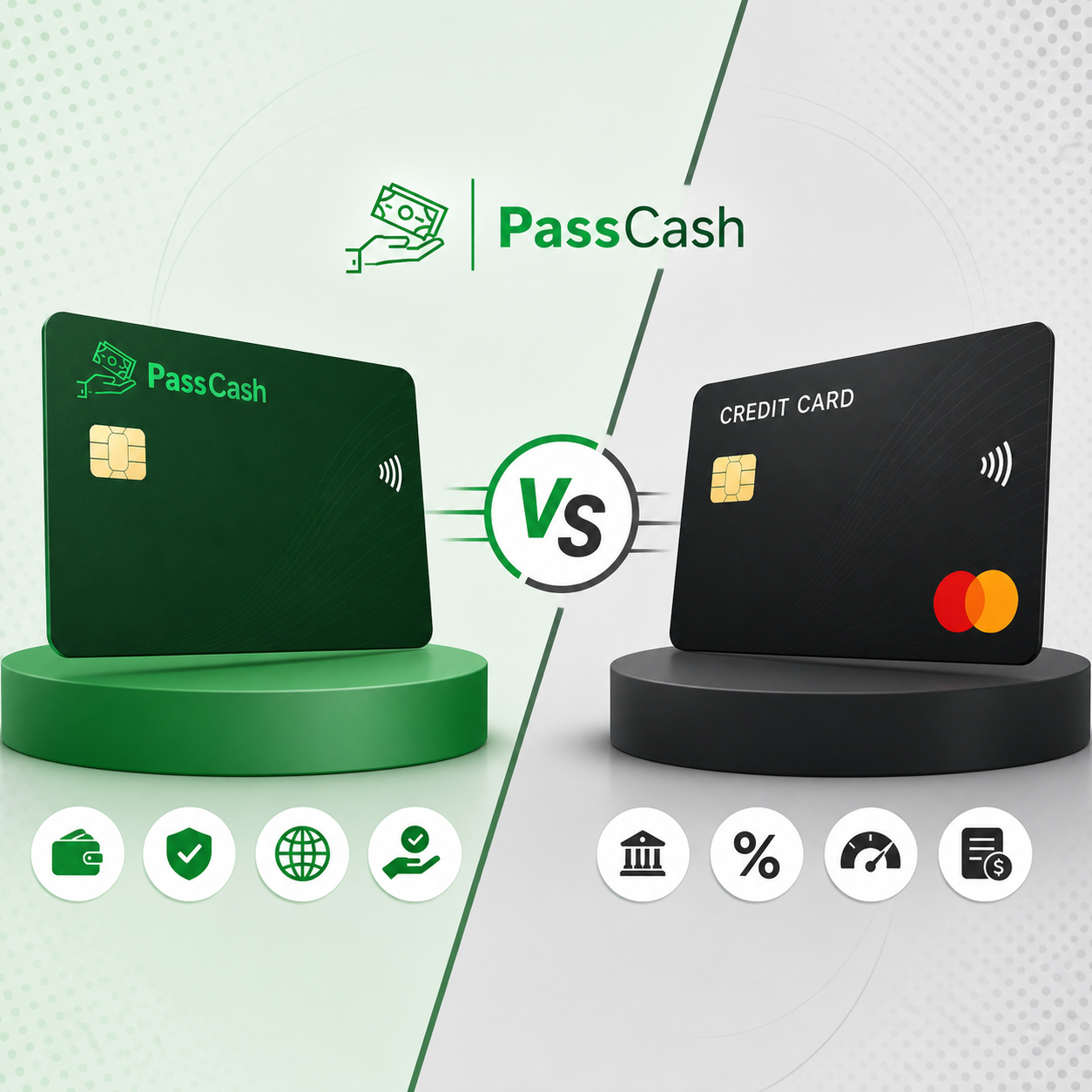
Wondering how the physical card compares with a credit card? See PassCash Physical Debit Card vs Credit Card: What's the Difference?
When will my physical card arrive?
Physical PassCash cards are released in batches. Each time 100 card orders come in, that batch is produced and sent out, and your card ships with the batch your order is part of.
That means the wait depends on how quickly a batch fills. If you need to pay soon, especially before a trip, order your physical card early. If you're eligible for a virtual card, request it from your dashboard and use it for online payments while your physical card is on its way.
What happens at the checkout
When you pay, the merchant processes your PassCash card like any other debit card. PassCash checks that your balance covers the amount, approves the payment, and the amount comes out of your balance.
If the purchase is in a different currency from your balance, it is converted as part of the payment. Any conversion and transaction fees are listed in the Fees & Pricing Policy.
On supported online purchases, you may be asked to confirm the payment with 3D Secure. This extra check helps stop anyone else from using your card details.
Tips for smooth spending
Top up before big purchases. Make sure your balance covers flights, hotel deposits and other large payments, so they aren't declined.
Know the fees. Read the Fees & Pricing Policy before you spend, so there are no surprises.
Deposit on the right network. Stablecoins like USDT exist on more than one blockchain. Only send funds on a network your PassCash account supports, or they may not arrive.
Review your activity. A quick look at your transactions each week helps you stay on budget and spot anything you don't recognise. Our 10 money management tips can help too.
Keep your details private. Never share your card number, PIN, password or verification codes with anyone, even someone who says they work for PassCash.
Act fast if your card is lost. Contact us through live chat in the PassCash Help Center straight away so we can secure your account.
Who it's for
A PassCash card suits anyone who holds stablecoins and wants to use them day to day. That includes freelancers and remote workers paid in stablecoins, families receiving money from relatives abroad, and online shoppers who struggle to find a card that works with international websites. It also suits travellers who want one balance for bookings and spending.
Things to keep in mind
Stablecoins aim to hold a steady value, but they are digital assets and carry risks. Availability, supported assets, card types and eligibility vary by customer and country. Read our Risk Disclosure and Card Services Disclosure before you start. Nothing in this article is financial, investment, tax or legal advice.
Start spending your stablecoins
Create your PassCash account, add funds and request your card. Your stablecoins become money you can spend at the checkout, online and in store.
Have a question first? Chat with our team in the PassCash Help Center. No login needed.
Hold it. Move it. Spend it.